La différence entre la vanne d'étranglement et la vanne de régulation de vitesse

Hydraulic bench press, the choke valve is one of the most basic types of flow control valves, and the other flow valves contain a portion of the choke valve. The throttle valve uses the change in the cross-sectional area of the flow to adjust the flow rate of the passage to achieve stepless speed regulation of the speed of the actuator. The flow rate through the flow valve can be regarded as only related to the flow area of the orifice and the pressure difference between the front and the back of the orifice. The throttle valve is divided into a simple choke valve, choke valve, adjustable choke valve.
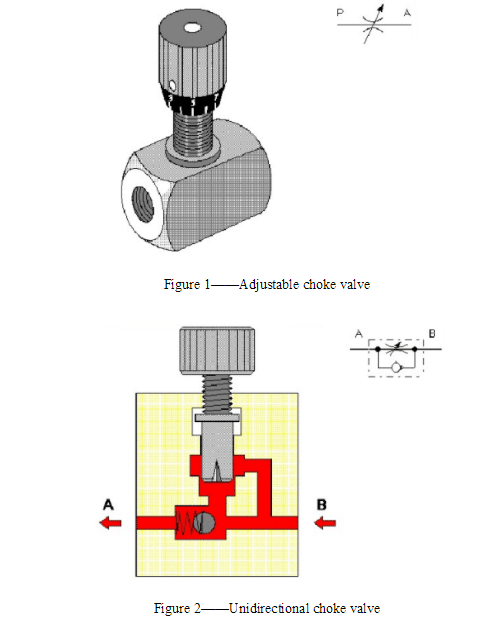
In addition to the opening of the adjusting nut (the size of the flow area), the outlet flow rate of the choke valve is also related to the differential pressure before and after the choke valve e. In order to make the hydraulic bench press flow rate through the choke valve not change with the load change, the other end measure is to keep the pressure difference before and after the flow through the choke valve to maintain an approximate constant when the load changes, the method is to perform pressure compensation, thus appearing Speed control valve. There are two common methods of pressure compensation: one is to connect the differential pressure reducing valve and the choke valve in series to form a pressure reducing valve of the pressure reducing type; the other is to connect the differential relief valve and the choke valve in parallel. A speed hydraulic bench press regulating valve that constitutes an overflow choke valve. The stability of the relief speed regulating valve is not as good as that of the decompression type speed regulating valve. It is only suitable for the inlet throttle speed regulating the hydraulic system with high power for which the speed stability is not too high.
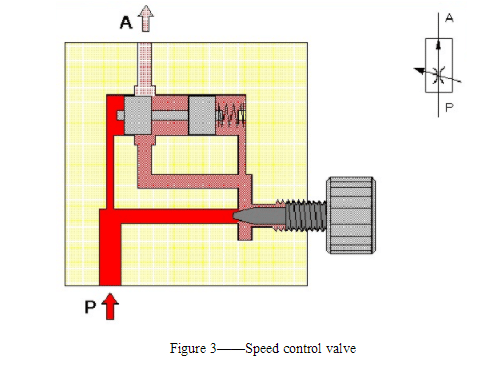
Speed control valve notes
When adjusting the hydraulic bench press flow rate, first loosen the fastening screw on the handle, and rotate the handle clockwise to increase the flow rate; turn the handle counterclockwise to decrease the flow rate. After the adjustment is completed, the lock screw must be tightened again.
Use a speed control valve within the flow adjustment range.
For the variable speed-reducing valve to make the pressure compensator of the pressure compensator, in order to ensure a satisfactory regulation flow, the valve inlet pressure should be no less than 1 bar.
In order to obtain satisfactory flow regulation, a certain value of differential pressure should be maintained at both ends of the inlet and outlet of the orifice, otherwise, a constant flow rate cannot be maintained and it will be affected by the workload.
For the variable pressure relief valve (bypass valve) as the pressure compensator of the pressure compensator, because there is always some oil that often flows into the tank through the bypass valve, the flow rate of the pump is greater than the flow rate of the valve