ข้อมูลเบื้องต้นเกี่ยวกับระบบส่งกำลังไฮดรอลิก

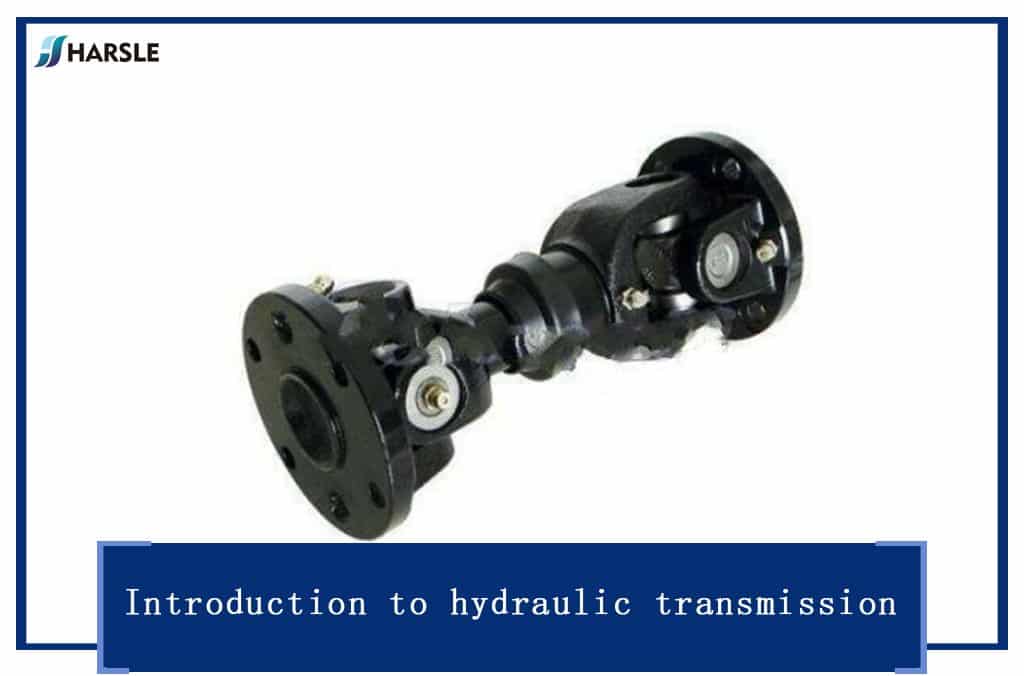
What is hydraulic transmission
Hydraulic press advantages and disadvantages, Hydraulic transmission refers to a transmission method that uses liquid as the working medium for energy transmission and control. In liquid transmission, according to the different forms of energy transmission, it is divided into the hydraulic transmission and hydraulic transmission. Hydraulic transmission is mainly a transmission method that uses liquid kinetic energy for energy conversions, such as hydraulic coupling and hydraulic torque converter. Hydraulic transmission is a transmission method that uses hydraulic pressure to convert energy. The use of hydraulic transmission technology in the machinery can simplify the structure of the machine, reduce the quality of the machine, reduce material consumption, reduce manufacturing costs, reduce labor intensity, and improve work efficiency and reliability.
What are the hydraulic transmission classifications
hydraulic press advantages and disadvantages, Hydraulic transmission can be classified according to the following standards:
1. According to the circulation mode of the working medium: open system and closed system.
2. According to one hydraulic pump to supply oil to multiple actuators: series system, parallel system, single system, multiple systems.
3. According to the number of pumps used in the system: a single pump system and a multiple pump system.
Remarks: There are also small categories of hydraulic pumps in hydraulic transmission:
First: The plunger pump is divided into an axial piston pump and a radial piston pump.
Second: Gear pumps are divided into internal gear pumps and external gear pumps.
Third: The vane pump is divided into a single-acting pump and a double-acting pump.
Fourth: Screw pumps are divided into twin screw pumps and three screw pumps.
Analysis of the advantages of hydraulic transmission
hydraulic press advantages and disadvantages, Compared with mechanical transmission, the hydraulic transmission has the following main advantages:
(1) Since oil is generally used as the transmission medium, the hydraulic components have good lubrication conditions; the working fluid can be transported to any position by pipeline, allowing the hydraulic actuator and the hydraulic pump to maintain a certain distance; the hydraulic transmission can easily remove the original The rotary motion of the motive becomes linear motion. These characteristics are very suitable for the needs of various construction machinery and mining equipment. Typical application examples are the single hydraulic props and hydraulic supports used in coal mines.
(2) A wide range of step-less speed regulation can be realized during operation, the transmission ratio can be as high as 1:1000, and the speed regulation performance is not limited by the size of the power.
(3) It is easy to realize load control, speed control and direction control and can be centralized control, remote control, and automatic control.
(4) The hydraulic transmission can realize the gapless transmission, so the transmission is stable, the operation is labor-saving, the response is fast, and it can start at high speed and change direction frequently.
(5) Hydraulic components are standardized, serialized, and generalized products, which are easy to design, manufacture, and promote the application.
Compared with electric drive, the main advantages of hydraulic drive are as follows:
(1) Small mass and small volume. This is because the motor is restricted by magnetic saturation, and the tangential force per unit area is tens of times different from the hydraulic pressure that the hydraulic machine can withstand.
(2) The movement inertia is small and the response speed is fast. The moment of inertia ratio (that is, the ratio of the driving torque to the moment of inertia) of a hydraulic motor is much larger than that of an electric motor, so its acceleration performance is good. For example, it usually takes one to several seconds to accelerate a medium power motor, while it only takes about 0.1s to accelerate a hydraulic motor of the same power. This kind of good dynamic characteristic is more important to the hydraulic control system.
(3) The low-speed stability of low-speed hydraulic motors is much better than that of electric motors.
(4) The application of hydraulic transmission can simplify the electrical system of machinery and equipment. This is of great benefit to underground work in coal mines with explosion hazards.
Analysis of the disadvantages of hydraulic transmission
(1) In the transmission process, because the energy needs to be converted twice, there are pressure loss, volume loss, and mechanical friction loss, so the total efficiency is usually only 0.75 to 0.8.
(2) The performance and efficiency of the transmission system are greatly affected by temperature. General hydraulic transmission has certain difficulties when working in high or low-temperature environments.
(3) The liquid has a certain degree of compressibility, and leakage on the mating surface is unavoidable, so the hydraulic transmission cannot guarantee a strict transmission ratio.
(4) The working fluid is very sensitive to pollution, and the contaminated working fluid is very harmful to the hydraulic components. Therefore, the fault of the hydraulic system is more difficult to find, and the technical level of the operation and maintenance personnel is relatively high.
(5) The manufacturing precision, surface roughness, material, and heat treatment requirements of hydraulic components are relatively high, so the cost is relatively high.
Application analysis of hydraulic transmission
(1) General industrial hydraulic system plastic processing machinery (injection molding machine), press machinery (forging press), heavy machinery (scrap briquetting machine), machine tool (automatic hexagonal lathe, surface grinder), etc.;
(2) Hydraulic system for mobile machinery, construction machinery (excavator), hoisting machinery (car crane), construction machinery (pile driver), agricultural machinery (combine harvester), automobile (steering gear, shock absorber), etc.;
(3) Hydraulic systems for the iron and steel industry, metallurgical machinery (rolling mills), lifting devices (lifts), roll adjustment devices, etc.;
(4) Civil engineering hydraulic system flood gates and dam devices (tide protection baffles), riverbed lifting devices, bridge operating mechanisms and mining machinery (rock drills), etc.;
(5) Hydraulic system turbines (speed regulating devices) for power plants, etc.;
(6) Hydraulic system for special technology, giant antenna control device, measuring buoy, aircraft landing gear retractable device and rudder control device, lifting rotating stage, etc.;
(7) Deck hoisting machinery (winches), bow doors, bulkhead valves, stern thrusters, etc. for ship hydraulic systems;
(8) Military-industrial hydraulic system artillery control device, ship anti-rolling device, aircraft simulation, etc.
(1) In the transmission process, because the energy needs to be converted twice, there are pressure loss, volume loss, and mechanical friction loss, so the total efficiency is usually only 0.75 to 0.8.
(2) The performance and efficiency of the transmission system are greatly affected by temperature. General hydraulic transmission has certain difficulties when working in high or low-temperature environments.
(3) The liquid has a certain degree of compressibility, and leakage on the mating surface is unavoidable, so the hydraulic transmission cannot guarantee a strict transmission ratio.
(4) The working fluid is very sensitive to pollution, and the contaminated working fluid is very harmful to the hydraulic components. Therefore, the fault of the hydraulic system is more difficult to find, and the technical level of the operation and maintenance personnel is relatively high.
(5) The manufacturing precision, surface roughness, material, and heat treatment requirements of hydraulic components are relatively high, so the cost is relatively high.
hydraulic press advantages and disadvantages, Generally speaking, the advantages of hydraulic transmission are the main ones. Some of its shortcomings are gradually being overcome with the development of production technology. If the advantages of other transmission methods are further absorbed, the combined transmission of electro-hydraulic, gas, and hydraulic can be used to give full play to its characteristics.