K čemu slouží hydraulický lis a jeho vlastnosti


What is the hydraulic machine used for
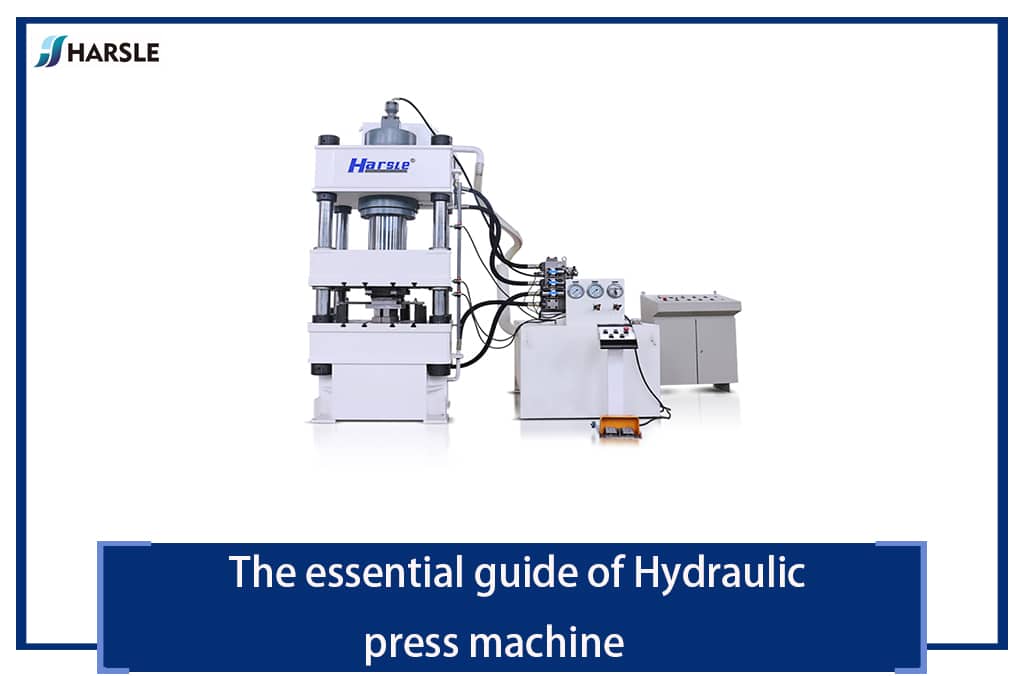
The hydraulic press machine is a kind of machine that uses liquid as a working medium to transfer energy to realize various processes. In addition to being used for forging and forming, hydraulic presses can also be used for straightening, pressing, packing, and pressing. Hydraulic presses include hydraulic presses and hydraulic presses. The water-based liquid is called the hydraulic press, and oil is called the hydraulic press. The specifications of hydraulic presses are generally expressed by nominal working force (kN) or nominal tonnage (tons). Most hydraulic presses for forging are hydraulic presses with relatively high tonnage. In order to reduce the size of the equipment, large forging hydraulic presses often use higher pressures (about 35 MPa) and sometimes use ultra-high pressures above 100 MPa. Hydraulic presses for other purposes generally use a working pressure of 6 to 25 MPa. The tonnage of the hydraulic press is lower than that of a hydraulic press.
Working medium of hydraulic press
The function of the working medium used in the hydraulic press machine is not only to transmit the pressure but also to ensure that the working parts of the machine are sensitive, reliable, long-lived, and less leaking. The basic requirements of hydraulic press for working medium are ① Suitable fluidity and low compressibility to improve transmission efficiency; ② Anti-corrosion; ③ Good lubrication performance; ④ Easy to seal; ⑤ Stable performance, long-term work Without deterioration. The hydraulic press initially uses water as the working medium, and later it uses an emulsion made by adding a small amount of emulsified oil to the water to increase lubricity and reduce rust. In the late 19th century, hydraulic presses using mineral oil as the working medium appeared. The oil has good lubricity, anti-corrosion, and moderate viscosity, which is beneficial to improve the performance of the hydraulic press. In the second half of the 20th century, a new type of water-based emulsion appeared, and its emulsified form was “water-in-oil” instead of the original “oil-in-water”. The outer phase of the “water-in-oil” emulsion is oil. Its lubricity and corrosion resistance is close to the oil, and it contains very little oil and is not easy to burn. However, water-based emulsions are more expensive, which limits their promotion.
The advantages and disadvantages of hydraulic press
(1) Advantages
For hollow variable cross-section structural parts, the traditional manufacturing process is to first stamp and form two halves and then weld them into a whole, while hydroforming can integrally form hollow structural parts that vary along the component section at a time. Compared with the stamping and welding process, the hydroforming technology and process have the following main advantages:
1. Reduce quality and save materials. For typical parts such as automobile engine brackets and radiator brackets, hydroformed parts can be reduced by 20% to 40% compared to stamping parts; for hollow stepped shaft parts, the weight can be reduced by 40% to 50%.
2. Reduce the number of parts and molds and reduce mold costs. Hydroformed parts usually only need one set of molds, while most stamping parts require multiple sets of molds. The number of hydroformed engine bracket parts has been reduced from 6 to 1, and the number of radiator bracket parts has been reduced from 17 to 10.
3. The hydraulic press can reduce the amount of welding for subsequent machining and assembly. Take the radiator bracket as an example, the heat dissipation area has increased by 43%, the number of solder joints has been reduced from 174 to 20, the number of processes has been reduced from 13 to 6, and the productivity has increased by 66%.
4. Improve the strength and rigidity of hydraulic press, especially fatigue strength. For example, a hydroformed radiator bracket can increase its rigidity by 39% in the vertical direction and 50% in the horizontal direction.
5. Reduce hydraulic press production costs. According to the statistical analysis of the applied hydroformed parts, the production cost of hydroformed parts is reduced by 15% to 20% on average, and hydraulic press’s die cost is reduced by 20% to 30%.
(2) Disadvantages
1) Hydraulic press components require high manufacturing precision. Due to the high technical requirements of components and the difficulty of assembly, the use and maintenance are strict.
2) Difficulties in achieving constant ratio transmission. The hydraulic transmission uses hydraulic oil as the working medium, and it is inevitable that there will be leakage between the relative moving surfaces, and the oil is not absolutely incompressible. Therefore, it is not suitable to be used on occasions with strict transmission ratio requirements, such as the transmission system of thread and gear processing machine tools.
3) The oil is affected by temperature. Because the viscosity of the oil changes with the temperature, it is not suitable to work in high temperature or low-temperature environment.
4) It is not suitable for long-distance transmission of power. Because the oil pipe is used to transmit pressure oil, the pressure loss is large, so it is not suitable for long-distance transmission of power.
5) Air mixed in oil can easily affect working performance. Air mixed in oil can easily cause crawling, vibration, and noise, which will affect the working performance of the system.
6) The oil is easy to pollute. After the oil is polluted, it will affect the reliability of the system.
7) It is not easy to check and eliminate the failure.